
庭园与活动
东京椿山庄大酒店的“今”・看点
A Stay Inside Japanese Design History: Traditional and Contemporary Architecture at Hotel Chinzanso Tokyo
Japanese Architecture at Hotel Chinzanso Tokyo—Quick Guide:
- Location: The hotel, located in central Tokyo, is one of Japan’s rare luxury hotels where a variety of Japanese architecture can be experienced at one location.
- Top highlights? From a historic pagoda to a modern Shinto wedding ceremony sanctuary, the property weaves traditional and modern Japanese design into a single stay.
- Who is this for? Architecture enthusiasts and cultural travelers will appreciate the hotel’s various designs.
- How to best experience it? Stay at Hotel Chinzanso Tokyo and go on a guided tour of the traditional garden. Guests with a suite room have the added benefit of exclusive access to the hotel’s Executive Lounge, “Le Ciel.”
Hotel Chinzanso Tokyo: A Living Museum of Japanese Architecture in the Capital
Hotel Chinzanso Tokyo is home to numerous Japanese traditional and contemporary designs and structures, making it an ideal destination for visitors looking to immerse themselves in the world of architecture in Japan. Few hotels in the world let you move through nearly a thousand years of design history in a single stay. This impressively wide range of structures will give you deeper insight into Japanese architecture, and it will feel as if you’ve traveled throughout the country.
Below are five architectural highlights guests can experience during their stay.
1.Entsukaku, the Three-Story Pagoda that has Traveled through the Centuries
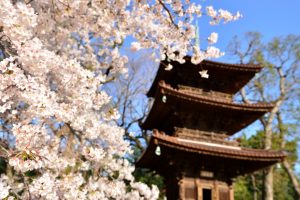
Chinzanso Garden’s famous Three-Story Pagoda
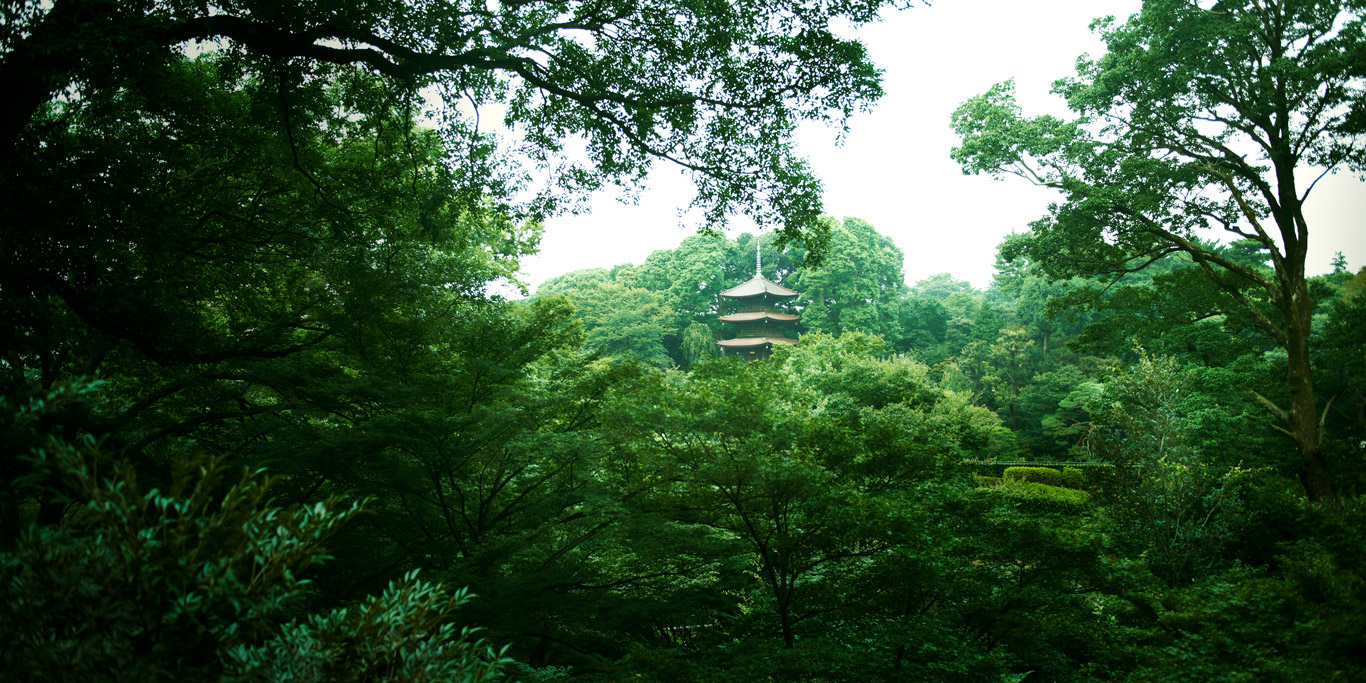
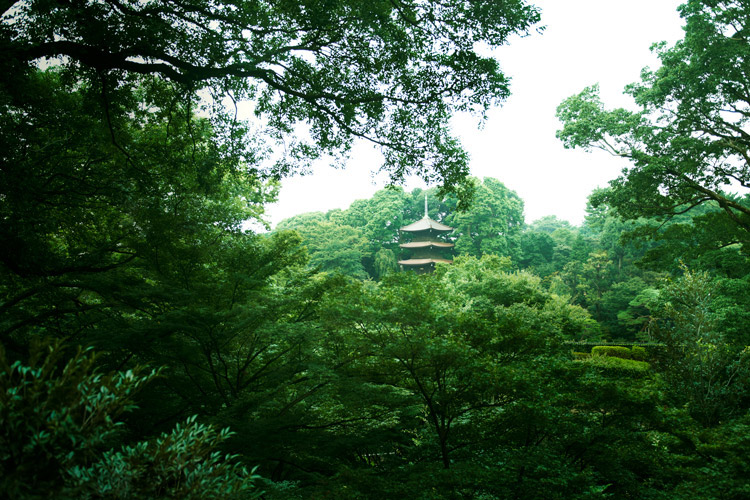
Entsukaku, the Three-Story Pagoda is one of the hotel’s most well-known historic structures. Now set in Chinzanso Garden, it was originally located in Hiroshima at a temple called Chikurinji–the structure itself is thought to date back to the twelfth century. The pagoda was relocated here in 1925 by Baron Fujita Heitaro, the owner of the Chinzanso property at the time, who wanted to respect the wish of the former owner, Duke Yamagata, of keeping the garden as an oasis in the heart of the city.
While there are many Buddhist temples in the city, there are only three ancient pagodas: Entsukaku happens to be one of them, and is also the only pagoda with three stories. It is designated as a Tangible Cultural Property of Japan due to its historic and cultural importance. While many of Tokyo’s old structures have been destroyed throughout the centuries, Entsukaku has miraculously survived fires, natural disasters, and bombings during the WWII air raids. The Great Tohoku Earthquake in 2011 prompted a major renovation of the structure but even then it did not sustain major damage.
When viewing Entsukaku, pay attention to the intricate woodwork that gives the pagoda a gorgeous appearance despite the fact that it is unpainted. Pagodas built more recently have a much simpler design but are often painted in a vibrant vermillion color.
The pagoda’s dignified appearance stands out from any angle, but is especially impressive when viewed from the hotel grounds–those staying at a room with a garden view are even able to see it from the comfort of their accommodation. At night, lit from below, it has a quiet surreal presence against the backdrop of Tokyo’s city lights.
2.An Oasis of Art and Culture at Executive Lounge “Le Ciel”

Those staying overnight at one of the hotel’s suite rooms have exclusive access to the Executive Lounge “Le Ciel.” In addition to check-in and check-out services by staff, the lounge also offers cultural and seasonal workshops, as well as light meals, teatime, evening canapés, and beverage services.
The lounge itself is reconstructed from a historic chapel and features these architectural details, such as carefully-preserved chapel benches used as pillars. Details throughout the lounge reference Duke Yamagata, the original owner of Chinzanso Garden, such as the entrance doors with his initials carved on it, and traditional Yamagata Dantsu carpets featuring intricate handmade embroidery, from Yamagata’s birthplace.
Look up in the dining area and you will find a ceiling finished in kumiko: the traditional Japanese joinery technique in which geometric patterns are assembled without nails. The shokko pattern used is associated with harmony and longevity.
The lounge provides guests with a rare opportunity to experience culture and traditional and modern Japanese craftsmanship in a relaxed, refined atmosphere. Explore here for more information on the Executive Lounge “Le Ciel” and the cultural experiences it offers.
3.Ryotei and Traditional Restaurants – Fine Dining in Classic Japanese Architecture
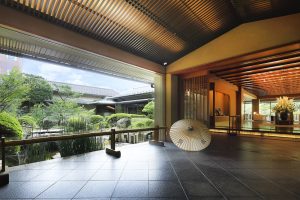
Ryotei Kinsui entrance at Hotel Chinzanso Tokyo
At the Japanese-style restaurants of Hotel Chinzanso Tokyo, guests can enjoy the elegant atmosphere of traditional Japanese interiors with fine dining.
At Kinsui, the garden’s ryotei, a high-end traditional Japanese restaurant serving kaiseki courses, you will be welcomed by refined architecture surrounded by the sounds and sights of nature. The private dining rooms are spacious and have tatami mat flooring, sliding doors, and tokonoma alcoves. In these spaces, guests can feel the quintessence of classic Japanese interiors.
On the other hand, dining places like Mokushundo, which serves grilled dishes on lava stones from Mt. Fuji has a retro, Showa-period (early 20th century) atmosphere. Mokushundo’s building is actually more than one hundred years old and has been renovated after being located in Chinzanso Garden.
Both these restaurants offer top-class dining as well as a chance to admire traditional Japanese architecture. The buildings are constructed with traditional materials, like bamboo and traditional paper, and are open to the outdoors, connecting visitors to the sounds and sights of the garden in every season.
Learn more about the beautiful restaurants and dining options Hotel Chinzanso Tokyo has to offer here.
4.Mori no miya Garden Sanctuary: Modern Design Meets Shinto Architecture
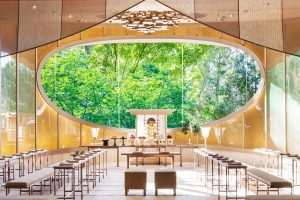
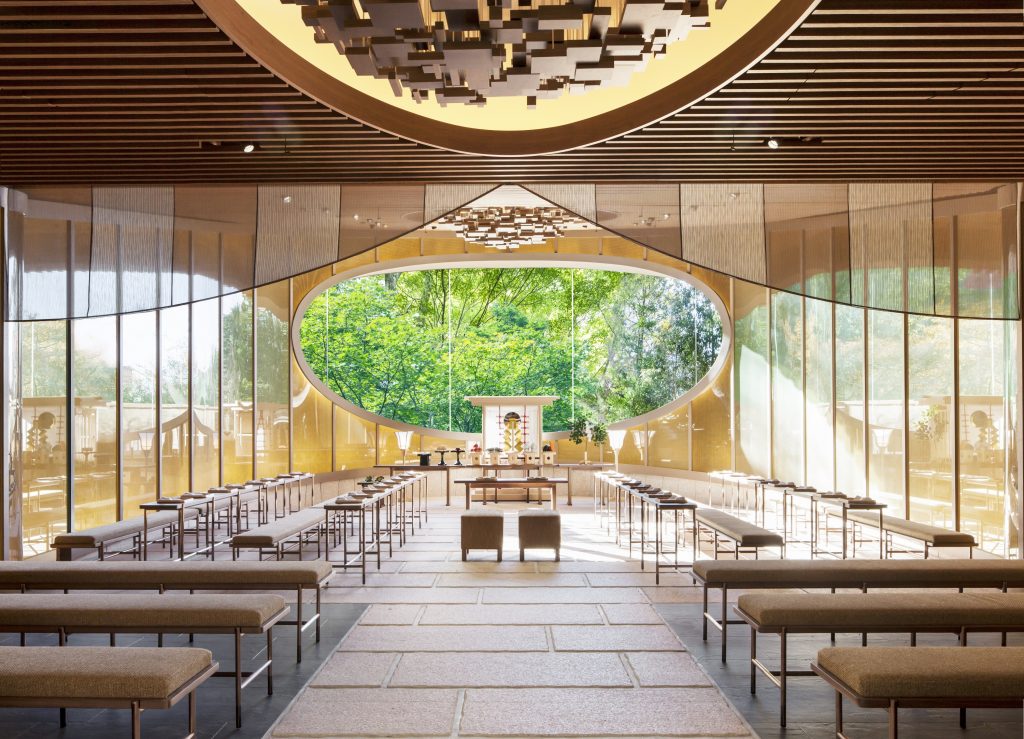
Mori no miya Garden Sanctuary, a modern Shinto ceremony hall for weddings
Hotel Chinzanso Tokyo is also famous as a venue for wedding ceremonies. Among the several ceremony halls on the precincts, the Mori no miya Garden Sanctuary stands out through its impressive structure that combines Shinto shrine elements with contemporary architecture. This hall, completed in 2017, enshrines the deities of Izumo Taisha, a great shrine in Shimane Prefecture dedicated to the gods of marriage and relationships.
Take a step inside and you will feel the particular love and respect for nature that is present in any type of traditional Japanese architecture. The ceremony hall blends in perfectly with its surroundings and showcases the garden beautifully.
Japanese traditional Shinto architecture is taken to another level through a futuristic approach. The design with ascending lines that meet at the center symbolizes the wish for a future full of happiness for the newlyweds. This interior truly projects the present moment into the future.
5.Hotel Chinzanso Tokyo – Contemporary Japanese Architecture Open to the World
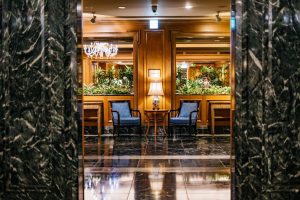
Another structure that will surely capture the attention of architecture enthusiasts is the building of Hotel Chinzanso Tokyo itself. From the lobby to the hallways and the layout of the rooms, the hotel has a tasteful contemporary architecture that meets the highest international standards. It was designed as an environment where any guest, no matter the country they come from, should feel just as comfortable as they would feel at home.
Although the building employs Western architecture, the details throughout the interior utilize Japanese materials and motifs, such as vases of refined Arita porcelain, woodblock print art, and bed decorations woven in Nishijin, the famous traditional weavers’ district of Kyoto.
It can be said that the building of Hotel Chinzanso Tokyo, nestled in its beautiful garden full of historical monuments, embodies the values of contemporary Japan — the values of hospitality and openness toward the world — while cherishing nature and historical roots.
Browse the guest rooms at Hotel Chinzanso Tokyo and prepare for a one-of–a-kind stay filled with architectural highlights.
Discover Traditional and Modern Japanese Architectural Treasures at Hotel Chinzanso Tokyo
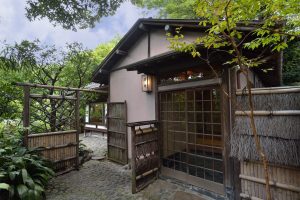
Hotel Chinzanso Tokyo’s Zangetsu tea ceremony house
Above we introduced five architectural highlights overnight guests can experience at Hotel Chinzanso Tokyo, from Buddhist and Shinto structures to contemporary Japanese buildings–but there is still more to discover with a walk through Chinzanso Garden. Zangetsu, a century-old tea ceremony house, stone lanterns that miraculously survived natural disasters, Buddhist statues and structures, and a vermillion bridge named after a legendary character–Chinzanso Garden is full of monuments that exemplify Japanese architecture from various ages and regions. After taking it all in, you’ll feel as if you’ve traveled throughout Japan without ever leaving the garden.
The best way to experience this treasure trove of architectural marvels is by booking a stay and joining a guided garden tour, offered in both English and Japanese. And with seasonal beauty and special events year-round–from cherry blossoms and fireflies to autumn foliage–there is always something new to discover, no matter when you visit.
Japanese Architecture at Hotel Chinzanso Tokyo: FAQ
- What types of Japanese architecture are at Hotel Chinzanso Tokyo?
The property spans nearly a thousand years of design history, including a 12th-century Buddhist pagoda, century-old traditional restaurants, and a contemporary Shinto wedding sanctuary. The main hotel building features traditional Japanese materials and motifs throughout. - Is the pagoda at Hotel Chinzanso Tokyo a real historic structure?
Yes. As mentioned in the article, Entsukaku is estimated to have been constructed originally in the 12th century, located at a temple in Hiroshima before being relocated to Chinzanso Garden in 1925. It is designated as a Tangible Cultural Property of Japan and is one of only three historic pagodas in Tokyo, and the only one with three stories. - Can visitors explore the architecture without staying at the hotel?
Some highlights, including views of the pagoda, can be enjoyed during a garden visit. The garden is open to patrons of the hotel restaurants and shops currently. However, for a fuller experience and access to the Executive Lounge “Le Ciel,” an overnight stay is recommended. - What is the best way to experience the architecture at Hotel Chinzanso Tokyo?
Book an overnight stay and join a guided garden tour, available in English and Japanese. Suite guests also gain exclusive access to the Executive Lounge “Le Ciel,” where reconstructed chapel architecture meets traditional Japanese craftsmanship. - How old are the buildings and structures at Hotel Chinzanso Tokyo?
The oldest structure, Entsukaku pagoda, dates to the 12th century. Mokushundo restaurant is over 100 years old, the Executive Lounge is reconstructed from a historic chapel, making the property a living timeline of Japanese architectural history. - Is Hotel Chinzanso Tokyo a good destination for architecture and culture enthusiasts?
Few hotels anywhere offer this range in one accommodation: Buddhist, Shinto, traditional residential, and contemporary Japanese architecture. Visitors are also invited to enhance their experience with guided tours and seasonal events.
Updated on December September 11th, 2026